
Table of Contents
Income Tax Return Filing का पूरा परिचय
Income Tax Return Filing process भारत में taxpayers के लिए एक essential financial responsibility है।
यह process government को आपकी annual income और tax liability की clear information प्रदान करता है।
जब कोई individual या business अपनी income report करता है, तब tax authorities compliance verify करती हैं।
इसलिए सही समय पर tax return submission financial discipline और legal compliance दोनों सुनिश्चित करता है।
इसके अतिरिक्त, income declaration process financial transparency और economic accountability को मजबूत बनाता है।
यही कारण है कि taxpayers को इस system की fundamental understanding होना आवश्यक है।
India में tax reporting framework मुख्यतः Income Tax Department of India द्वारा regulate किया जाता है।
यह department assessment, refunds और compliance monitoring जैसी responsibilities manage करता है।
Official portal के माध्यम से taxpayers आसानी से return submit कर सकते हैं।
इसके लिए government ने एक dedicated platform भी develop किया है।
आप यह process online portal पर कर सकते हैं:
https://www.incometax.gov.in
Tax Return Submission क्या है और क्यों जरूरी है
Tax Return Filing का अर्थ है कि taxpayer अपनी yearly income और deductions report करता है।
इस report के आधार पर government final tax liability calculate करती है।
यह filing process salaried individuals, freelancers, professionals और businesses सभी के लिए relevant है।
हालांकि हर taxpayer के लिए filing mandatory नहीं होती, लेकिन कई situations में यह legally required है।
Income reporting करने से taxpayers कई financial benefits भी प्राप्त करते हैं।
उदाहरण के लिए refunds, loan approvals और visa processing में tax return महत्वपूर्ण भूमिका निभाता है।
यदि कोई व्यक्ति taxable limit से अधिक income earn करता है, तो return filing आवश्यक हो जाता है।
इसके अलावा loss carry forward या refund claim करने के लिए भी filing आवश्यक होती है।
Reliable information के लिए आप यह official guide देख सकते हैं:
https://www.incometax.gov.in/iec/foportal/help/how-to-file-itr
Income Tax System in India – Tax Structure और Framework
भारत का income tax system progressive taxation principle पर आधारित है।
इस structure में higher income earners अधिक tax rate pay करते हैं।
Taxation policy primarily Income Tax Act 1961 द्वारा govern की जाती है।
यह act assessment, deductions और compliance rules को define करता है।
Income tax framework विभिन्न income heads के आधार पर calculation निर्धारित करता है।
इन heads के अंतर्गत income categorize की जाती है।
मुख्य income categories इस प्रकार हैं:
Salary Income
Salary income में employee को employer से प्राप्त remuneration शामिल होता है।
इसमें basic salary, allowances और bonuses शामिल होते हैं।
House Property Income
यदि taxpayer property rent पर देता है, तो rent income taxable हो सकती है।
हालांकि home loan interest deduction available रहता है।
Business or Professional Income
Self-employed professionals और businesses अपनी net profit income report करते हैं।
यह category freelancers और consultants के लिए भी लागू होती है।
Capital Gains
Assets जैसे property या shares बेचने पर capital gain उत्पन्न होता है।
यह gain short-term या long-term categories में classify होता है।
Other Sources Income
Interest income, lottery winnings और gifts इस category में include होते हैं।
यह income residual category के रूप में report की जाती है।
Authoritative references:
https://www.incometaxindia.gov.in
Types of Income Tax Return Forms
India में different taxpayers के लिए अलग-अलग ITR forms उपलब्ध हैं।
Form selection taxpayer की income source और category पर depend करता है।
ITR-1 (Sahaj)
यह form salaried individuals और pensioners के लिए designed है।
इसमें limited income sources allowed होते हैं।
ITR-2
यह form individuals और HUF के लिए applicable है।
यह उन taxpayers के लिए है जिनकी business income नहीं होती।
ITR-3
यह form professionals और business owners के लिए बनाया गया है।
इसमें complex income structures report किए जाते हैं।
ITR-4 (Sugam)
यह form presumptive taxation scheme के तहत taxpayers के लिए होता है।
छोटे businesses और professionals इस form का उपयोग करते हैं।
Detailed forms information:
https://www.incometax.gov.in/iec/foportal/help/itr
Who Should File an Income Tax Return
हर taxpayer के लिए return filing mandatory नहीं होती, लेकिन कई conditions में यह आवश्यक हो जाती है।
यदि annual income basic exemption limit से अधिक है, तो filing करना जरूरी है।
इसके अतिरिक्त कुछ special scenarios भी filing requirement trigger करते हैं।
Mandatory Filing Situations
- taxable income exemption limit से अधिक हो
- foreign assets ownership exist करती हो
- high value financial transactions report हुए हों
- business या professional income earned हो
Voluntary Filing
कई taxpayers voluntarily return file करते हैं।
यह practice financial record maintain करने में मदद करती है।
Bank loans, visa applications और credit approvals के लिए ITR महत्वपूर्ण financial document होता है।
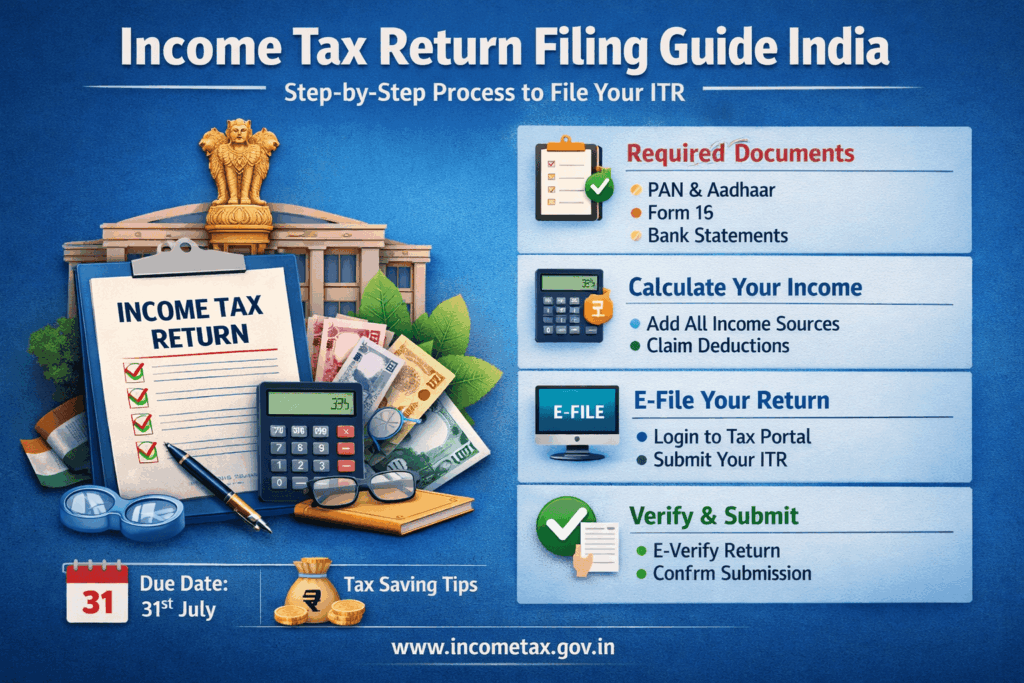
Step-by-Step Guide to Income Tax Return Filing
Income tax return process पहले complex लगता है, लेकिन सही approach इसे सरल बनाती है।
नीचे structured process दिया गया है जो beginners के लिए उपयोगी है।
Step 1: Required Documents Collect करें
Tax filing शुरू करने से पहले relevant financial documents collect करें।
ये documents income verification और deduction claims के लिए आवश्यक होते हैं।
Common documents में शामिल हैं:
- PAN card
- Aadhaar card
- Form 16
- bank statements
- investment proofs
Step 2: Income Calculate करें
अब taxpayer को अपनी total annual income calculate करनी होती है।
इस calculation में सभी income heads शामिल किए जाते हैं।
Step 3: Deductions Claim करें
Tax saving deductions apply करने से taxable income reduce होती है।
यह deductions tax liability को significantly कम कर सकती हैं।
Step 4: Tax Liability Determine करें
अब applicable tax slab के अनुसार payable tax calculate किया जाता है।
यदि tax already deducted है, तो balance tax determine होता है।
Step 5: Return Submit करें
Taxpayer official portal पर login करके return submit कर सकता है।
इसके बाद verification process complete करना आवश्यक होता है।
Important Tax Deductions for Taxpayers
Tax deductions taxpayers को legal तरीके से tax liability reduce करने का अवसर देती हैं।
यह provisions tax planning का महत्वपूर्ण हिस्सा हैं।
Section 80C
यह section investments पर deduction provide करता है।
Maximum deduction limit ₹1.5 lakh होती है।
Eligible investments में शामिल हैं:
- PPF
- ELSS funds
- life insurance premium
- tuition fees
Section 80D
Health insurance premium इस section के अंतर्गत deduction provide करता है।
यह provision healthcare expenses को encourage करता है।
Section 24
Home loan interest payment पर deduction available होता है।
यह housing sector investment को promote करता है।
Common Mistakes While Filing Tax Returns
कई taxpayers filing process में छोटी गलतियाँ कर देते हैं।
यह mistakes future notices और penalties का कारण बन सकती हैं।
Incorrect Personal Details
PAN या Aadhaar mismatch return rejection का कारण बन सकता है।
इसलिए personal information carefully verify करना आवश्यक है।
Wrong Income Reporting
Income sources omit करना compliance issues create कर सकता है।
इसलिए taxpayers को complete disclosure करना चाहिए।
Missing Deadlines
Late filing penalties और interest charges increase कर सकती है।
इसलिए deadline awareness महत्वपूर्ण है।
Benefits of Filing Income Tax Return
Income Tax Return Filing केवल legal compliance नहीं है।
यह कई practical financial benefits भी प्रदान करता है।
Financial Credibility
ITR financial credibility establish करने में मदद करता है।
Banks loan approvals के लिए ITR documents evaluate करते हैं।
Refund Claims
यदि excess tax deducted है, तो taxpayer refund claim कर सकता है।
यह refund direct bank account में credit होता है।
Carry Forward Loss
Capital loss future gains से adjust किया जा सकता है।
लेकिन इसके लिए timely return filing आवश्यक है।
Income Tax Return Filing Deadlines
भारत में individual taxpayers के लिए सामान्य deadline 31 July होती है।
हालांकि government परिस्थितियों के अनुसार deadline extend कर सकती है।
Late filing के लिए penalty provisions भी लागू होते हैं।
इसलिए timely compliance financial discipline का हिस्सा होना चाहिए।
Official updates के लिए देखें:
https://www.incometax.gov.in
Frequently Asked Questions
FAQ 1: What is Income Tax Return Filing?
Income Tax Return Filing एक process है जिसमें taxpayer अपनी yearly income report करता है।
इस report के आधार पर government final tax liability assess करती है।
FAQ 2: Who needs to file a tax return in India?
यदि individual की annual income exemption limit से अधिक है, तो filing आवश्यक होती है।
इसके अलावा foreign assets या high-value transactions भी filing requirement create करते हैं।
FAQ 3: What documents are required for filing?
Tax return preparation के लिए PAN, Aadhaar, Form-16 और bank statements आवश्यक होते हैं।
Investment proofs और capital gain records भी relevant हो सकते हैं।
FAQ 4: What happens if someone does not file a tax return?
Return filing avoid करने पर penalties और interest charges लागू हो सकते हैं।
Severe cases में legal notices भी issue किए जा सकते हैं।
FAQ 5: Can taxpayers revise their income tax return?
हाँ, taxpayers incorrect details होने पर revised return submit कर सकते हैं।
यह correction compliance errors को ठीक करने में मदद करता है।
References
- Income Tax Department – https://www.incometax.gov.in
- Income Tax Act 1961 – https://www.indiacode.nic.in
- Government Tax Guide – https://www.incometaxindia.gov.in
- Sanjeev Malik is a taxation trainer and accounting educator with experience in GST, income tax, and financial compliance training. He teaches practical accounting, taxation, and GST courses to students and professionals in India. He is the founder of IPA—The Institute of Professional Accountants , where students learn GST filing, income tax return preparation, and accounting software.
- Connect with him through the following platforms:
- Institute Website: tipa.in
- YouTube Channel:
Facebook Page: